High school students pilot a quadcopter drone as part of the Orange Works summer STEM program on campus. (Photo courtesy of Orange Works on Instagram)
Drones, Rovers and Submersibles: Orange Works Fuels the Next Generation of Engineers
The classroom spaces in the Center for Science and Technology buzz with activity as high school students build and learn how to code autonomous vehicles on land, in the air and underwater.
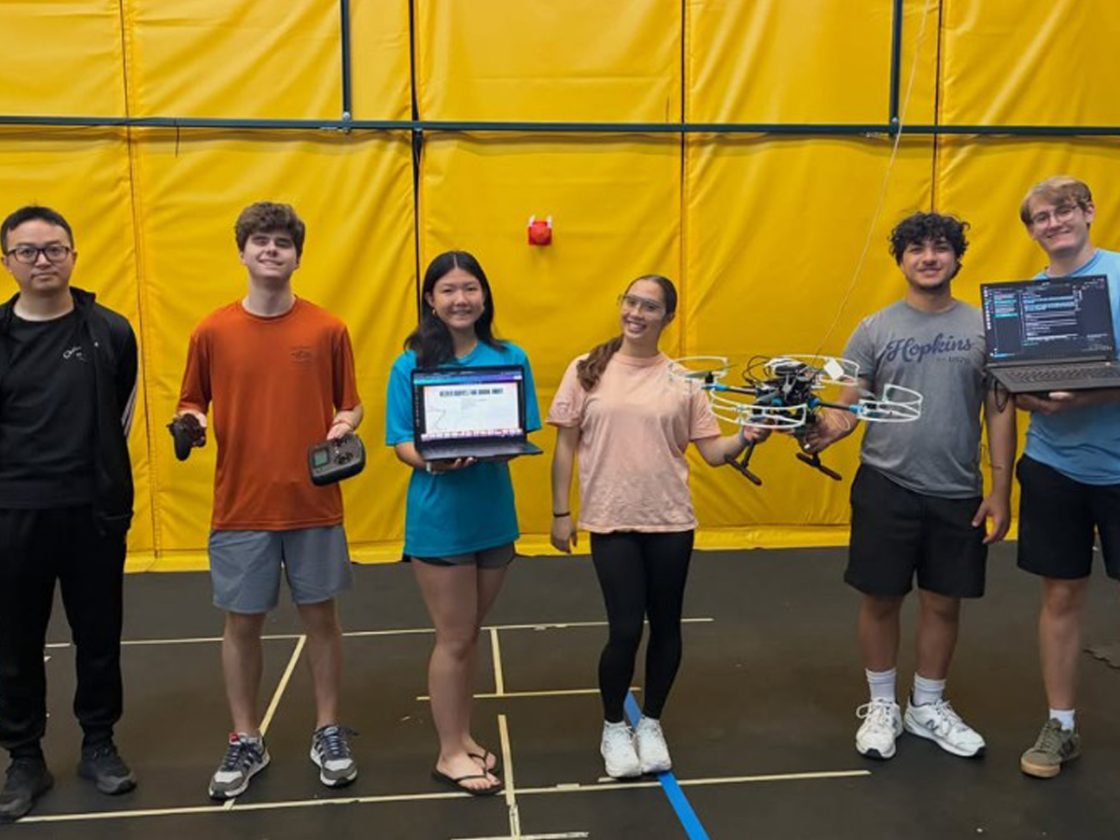
A black and white quadcopter drone hovers a few feet above ground, precisely navigating a test flight.
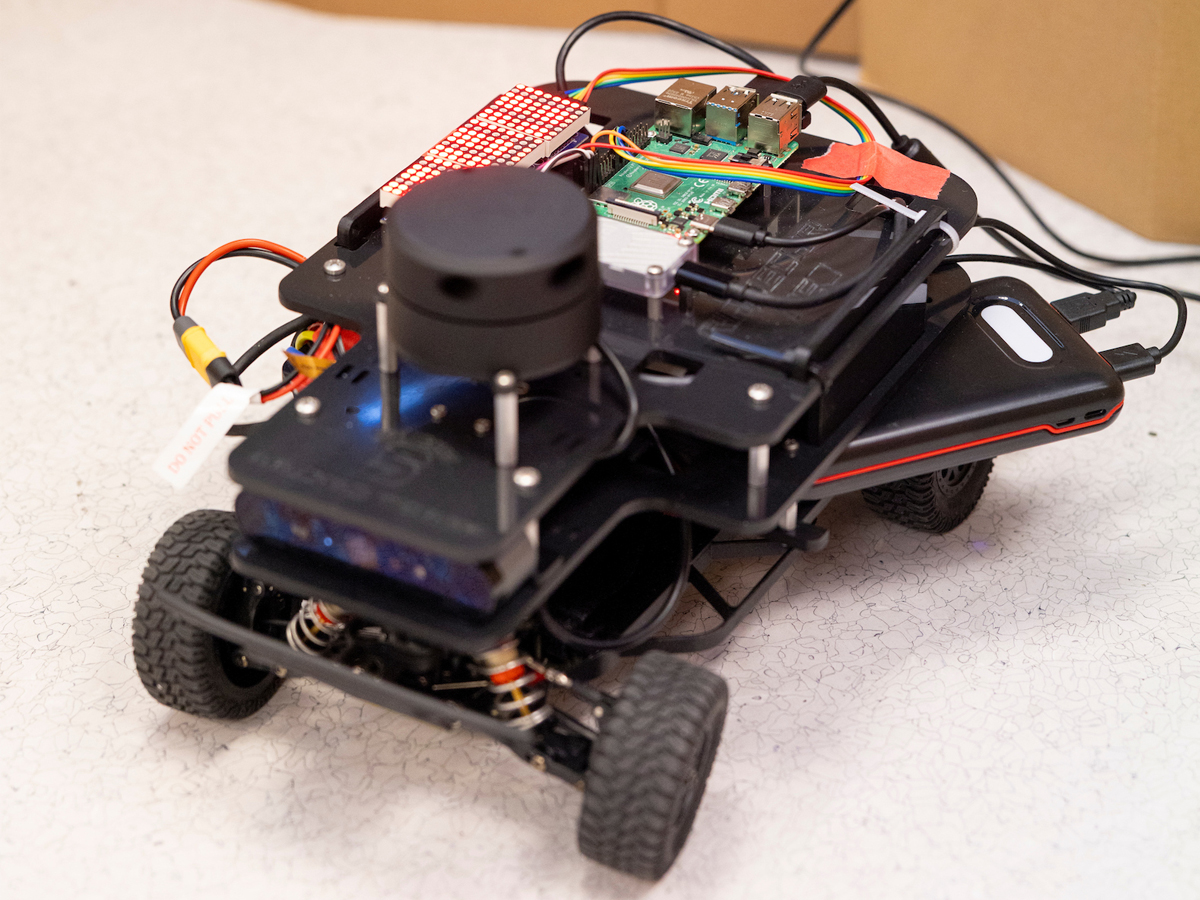
On the ground, black robotic rovers navigate a racecourse consisting of varying terrains, mapped out in blue and orange masking tape.
Below the surface, twin submersibles glide through the water, responding to commands from students on the pool deck relayed through a tethered topside control unit.
Orange Works is a summer STEM program that ran June 29 through July 28 in the College of Engineering and Computer Science (ECS), meant to develop a pipeline of high school students interested in working with autonomous vehicles. As part of the program, 23 high school students from the greater Syracuse area built and operated different autonomous systems using video game-style controllers.
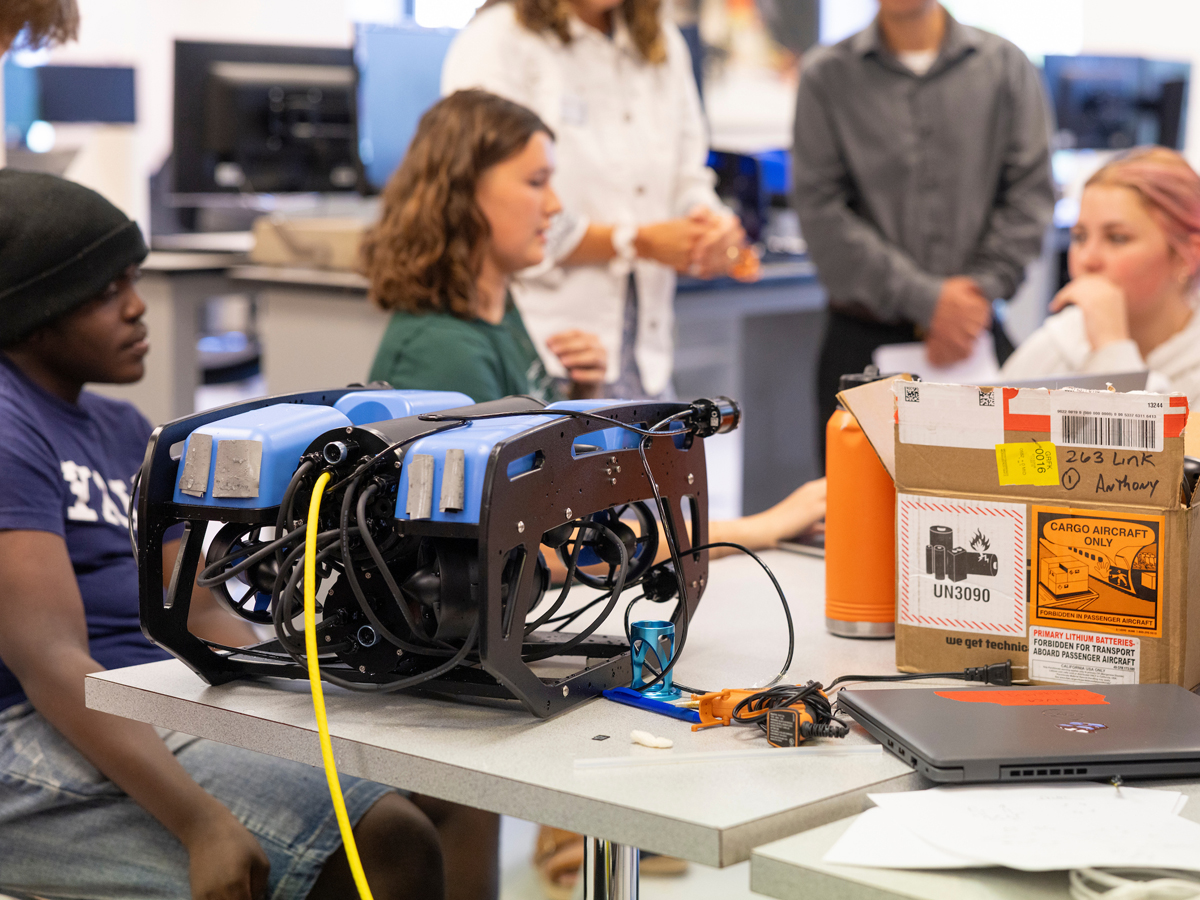
Students also worked on UAS-SAR (Unmanned Air System—Synthetic Aperture Radar), exploring radar imaging by building and flying a radar on a small drone and using it to capture images of different objects. Throughout the program, students also got a foundational look at the batteries driving these systems, discussing how factors like weight, capacity and charge time shape the performance of vehicles operating on land, in the air and underwater.
“It’s important to get high schoolers into engineering and the STEM fields,” says Connor Sumner ’25, G’27, a current teaching assistant who earned a bachelor’s degree in electrical engineering and will complete a master’s degree in May. “Seeing a drone fly by, watching the submarine glide across the water and learning how to build the race car is definitely one of the biggest factors that hook kids on these activities.”
From Curious Scholar to Confident Coder
Coen Fierke ’29 enjoyed the engineering lessons he learned three years ago as a student scholar at Orange Works so much that he enrolled as an electrical engineering major in ECS.
“This program is amazing, and it’s so helpful for students to come to Syracuse and get these opportunities to be introduced to these skills,” Fierke says. “I was motivated to attend Syracuse University after doing Orange Works because I could see myself doing electrical engineering. The program made me want to come here.”
Like many of the participants, Fierke came into the program with minimal coding experience, but after taking an introductory Python programming course each evening, Fierke says he soon felt comfortable navigating the coding required to program the different vehicles.
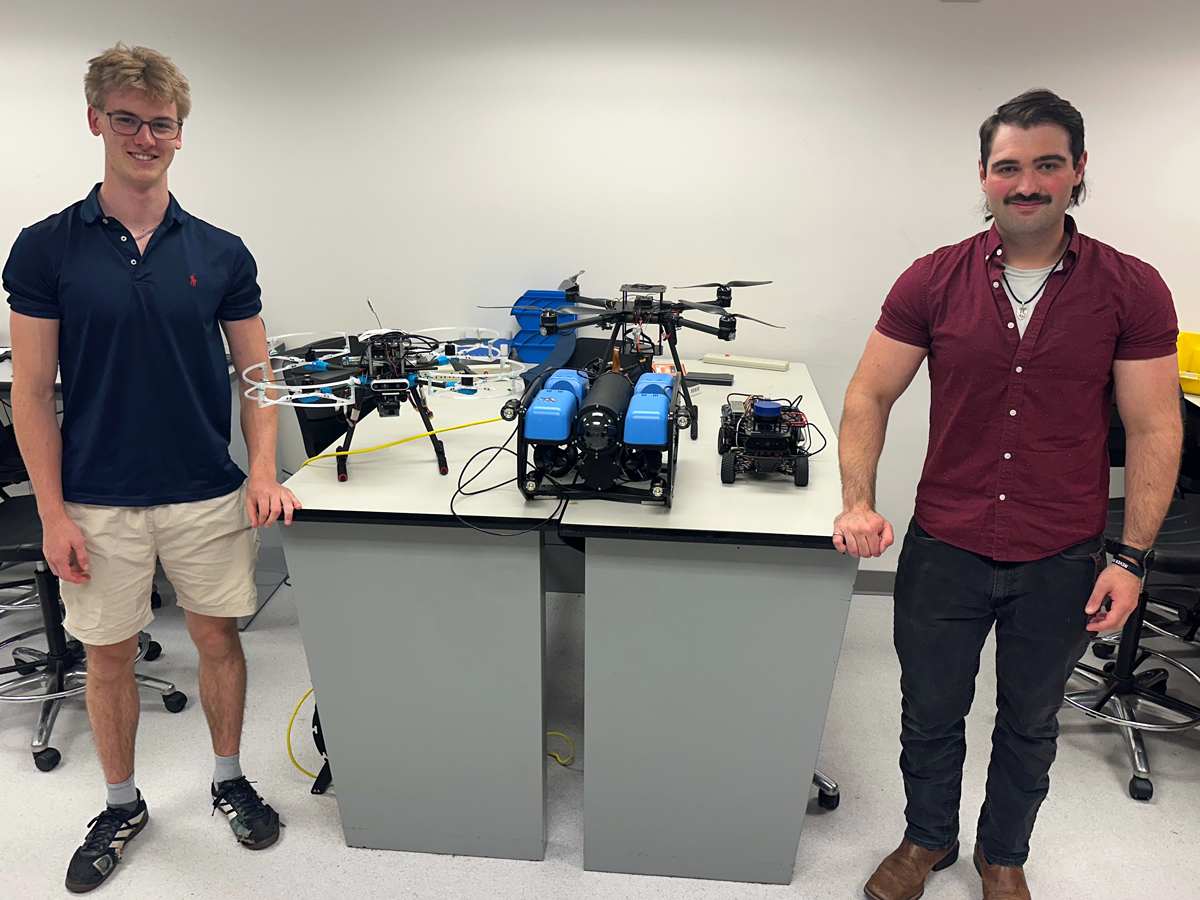
“These students will live in a world full of autonomous systems where, starting today, they will have the tools to help shape the future,” says Anthony Terrinoni, the associate director of academic programs in mechanical and aerospace engineering who also directs Orange Works.
A Slice of Life on Campus
In its fourth year, Orange Works falls under the mechanical and aerospace engineering department in ECS and is funded jointly by the Center for Advanced Systems and Engineering (CASE) at Syracuse University, and the NSF Energy Storage Engine in Upstate New York. Led by Binghamton University, the Engine brings together premier research and development universities, educational institutions, industry, economic development and community organizations and government agencies to grow the battery ecosystem in Upstate New York driving national and regional impact.
“Programs like Orange Works are only possible because of strong partnerships and support,” says Quinn Qiao, professor and chair of the Mechanical and Aerospace Engineering Department. “We’re grateful to CASE and the NSF Energy Storage Engine in Upstate New York for their financial support, which allows us to give these students hands-on experiences with battery integration and autonomous systems while helping build the next generation of engineers here in Central New York.”
“Orange Works is a great entry point into the Energy Storage Scholars Initiative, our effort to build a talent pipeline for this industry from high school through college and beyond,” says Tim Thomas, chief workforce development officer for the NSF Energy Storage Engine in Upstate New York. “Building a strong energy storage ecosystem in New York State requires a steady supply of skilled engineers, and programs like this one are essential to giving more students across our region access to engineering degrees at institutions like Syracuse’s College of Engineering and Computer Science.”
Students eat in the dining halls and visit campus spots like the Schine Student Center, the Barnes Center at The Arch and the Gaming and Esports Center, activities that Fierke says “help connect students with Syracuse and show them what life is like as a Syracuse University student.”
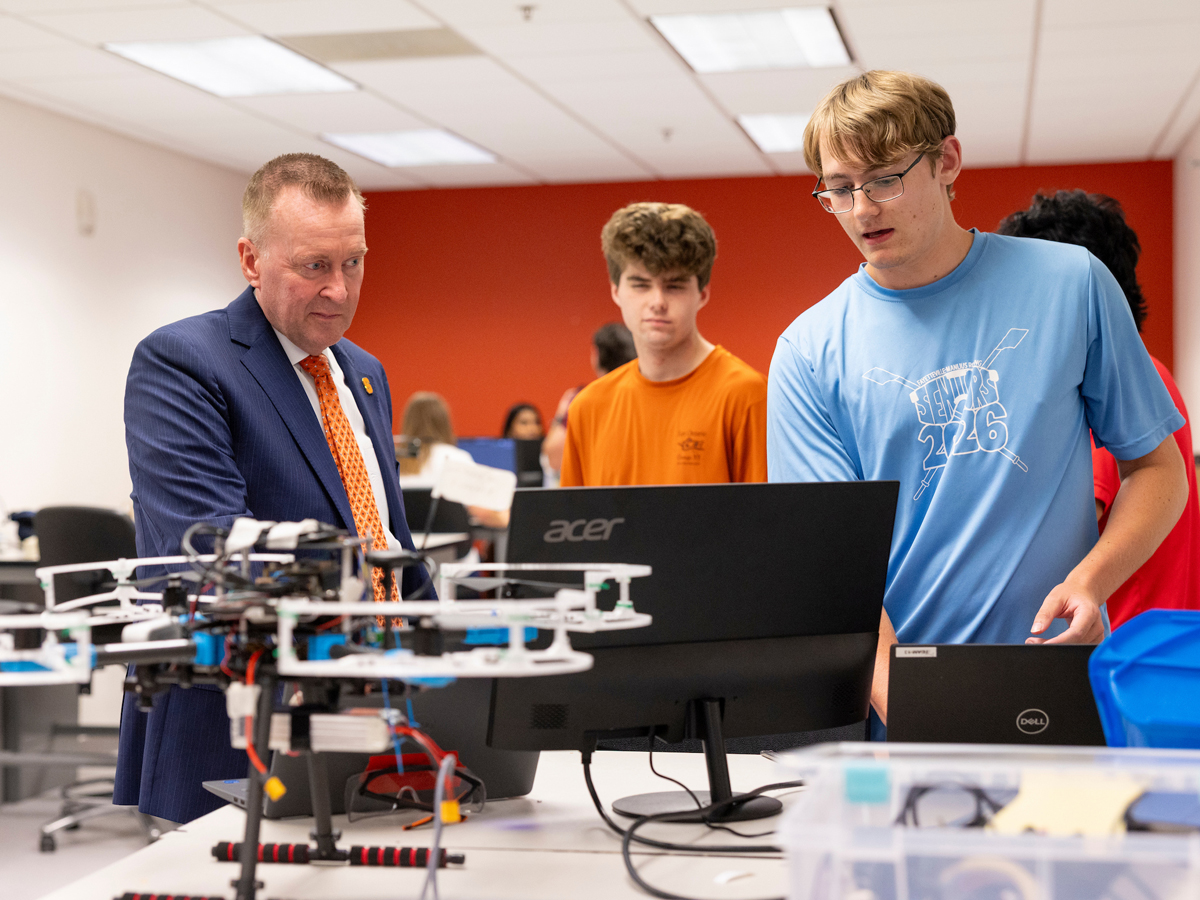
Orange Works participants also learn from ECS faculty and current students, building up their engineering skills while gaining the confidence to turn their passion for autonomous vehicles into a potential career path.
“Orange Works gives high school students the chance to work in teams and design, build and program a real autonomous system alongside our faculty and current students,” says Julie Hasenwinkel, interim ECS dean and associate provost for academic programs. “This unique and engaging experience helps them build the skills and confidence to pursue engineering and computer science degrees in college and become the innovators of the future.”
Putting Skills to the Test at MIT
The highlight of Orange Works was putting the students’ skills to the test on a challenging course as part of an international autonomous-vehicle competition at the Massachusetts Institute of Technology (MIT) Beaver Works Summer Institute, held July 30 through Aug. 2.
Leading up to the competition, students spend hours together testing their autonomous vehicles, supporting and learning from each other in a collaborative environment while overcoming challenges stemming from building, programming and troubleshooting.
“It’s pretty cool going home and telling your friends that you spent part of your summer building these autonomous vehicles. These students want to learn, and this program educates them now and prepares them for a career in the future,” Sumner says.
For Fierke, the same program that first sparked his interest in electrical engineering as a high school scholar has him giving back to aspiring engineers as one of the program’s teaching assistants.
“Orange Works creates these opportunities to network and learn from some of the best minds in the field,” Fierke says.