Preeti Jagadev always knew she wanted to be an educator. That passion carried her from India to a postdoctoral position at the University of Michigan, where she conducted research related to deployment-associated respiratory diseases among war veterans, to joining the faculty of the School of Information Studies.
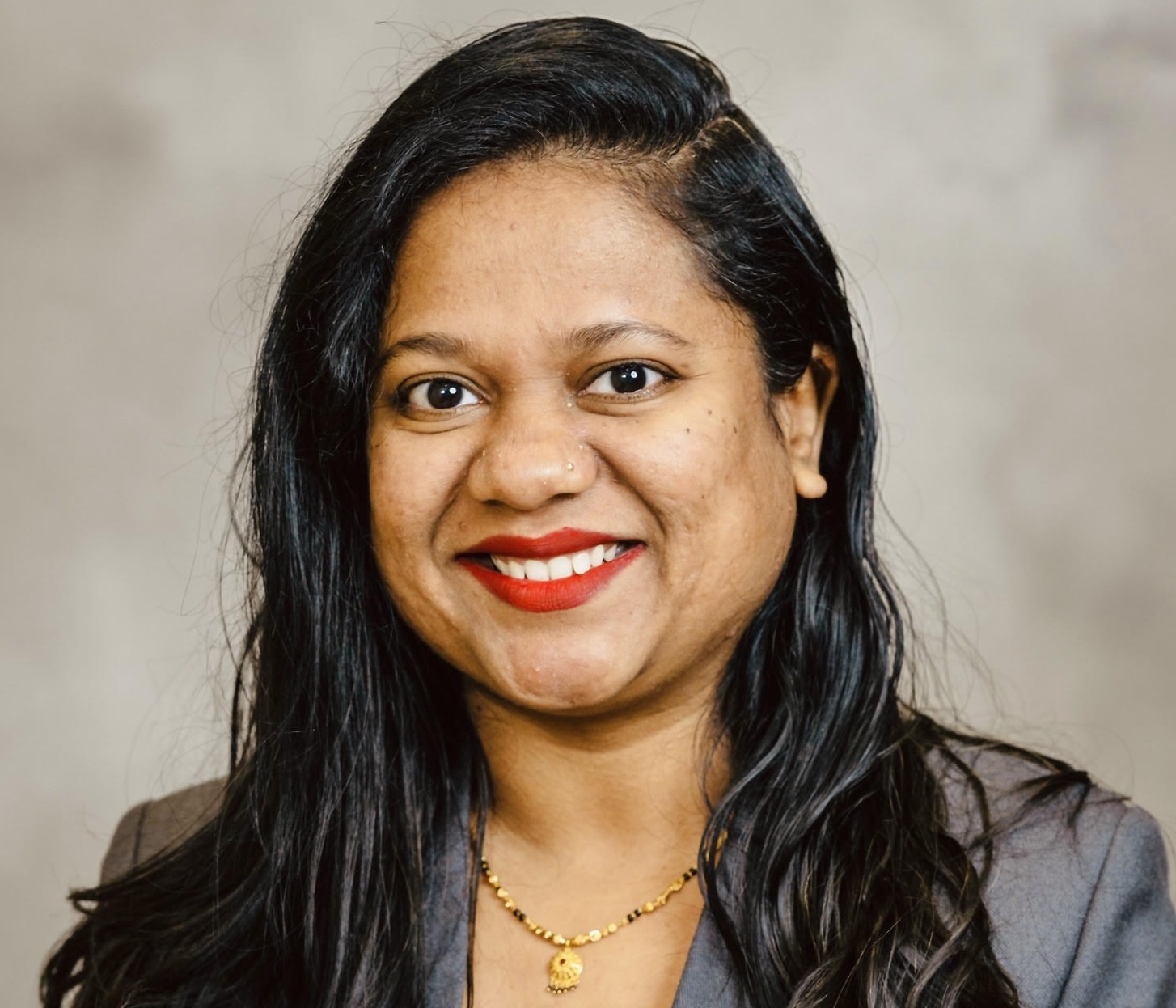
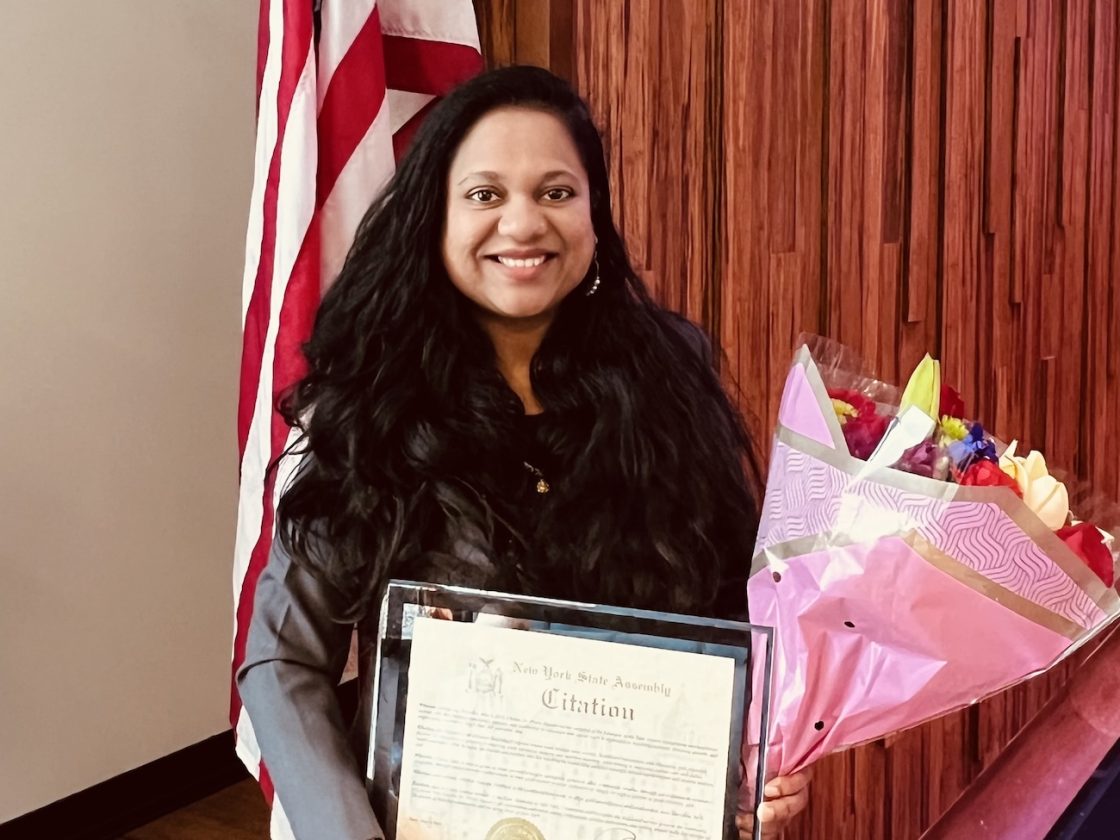
Her research background shapes how she teaches, pushing students beyond theory toward real-world problem-solving. Those efforts recently earned her recognition beyond the classroom: 2026 Exceptional Woman of Central New York (Educator) after one of her own students nominated her for the honor.
An assistant teaching professor, Jagadev teaches natural language processing and introduction to applied data science to graduate students, statistics to doctoral students and Python to undergraduates. This fall she’ll add a new course to her rotation on responsible artificial intelligence.
“I believe teaching is a continuous exchange of ideas, feedback and growth,” Jagadev told Syracuse University Today. “It is not simply about delivering knowledge to students; it is about listening, adapting and creating an environment where students feel empowered to learn. Every time I read course evaluations, I reflect on what is working well, what could be improved and how I can incorporate that feedback into my courses.”
Below, Jagadev reflects on how her research experience and commitment to meaningful engagement with students shape her approach to teaching and mentorship.
That was one of the most special moments of my life.
It showed I’m doing something meaningful that has an impact on the community, on my students. What made the honor especially meaningful was knowing one of my students nominated me. That shows I am making a difference in somebody’s life and I’m having an impact. I can’t even put into words how I felt, but I really felt very good. I felt very happy.

Preeti Jagadev with Assemblymember Pamela Hunter (right)
My research experience has shaped my teaching in many ways.
I don’t want my students to simply learn concepts theoretically, write code, submit an assignment and get a grade. I incorporate a lot of case studies and active learning into my courses. I want students to engage with the material rather than just memorize it. I also emphasize the importance of building relationships and networking, because I have seen firsthand how valuable those connections can be throughout an academic and professional career.
This is especially important now because AI is everywhere, and students are naturally going to use it. I don’t tell my students, “Don’t use AI.” I tell them, “Use it, but use it wisely.”
For example, if you’re stuck on a concept you don’t understand, use AI to explain it to you. Ask it questions and for examples. Use it as a resource to help you learn. But don’t use AI to do your entire assignment and then submit it without understanding what you are turning in. At that point, you’re not learning.
I tell my students, “If you use AI for everything, what are you going to do when you come to my exam?” My exams, including my coding exams, are done on paper. So you need to be able to sit down and think through a problem yourself.
Beyond that, I want students to think about the human side of AI. When we use any AI tool, we type in a prompt, we get an answer and that’s what we see. But there is a lot happening behind the scenes we don’t always think about. What happens to the data we put into these systems? How is it being used? What biases might be present? What are our rights? What are the environmental costs of running these systems? I want my students to slow down and ask those questions. Just because we can use a technology doesn’t mean we should use it without thinking about the consequences.
I’m teaching a responsible AI course this fall, the brainchild of my colleague Jasmina Tacheva, which I’m excited about. We’ll be able to have deeper conversations around these issues.
One of the biggest things I’ve learned is students really want a space where they can express their ideas comfortably without being judged. I tell them, “You can share your opinion. You can be completely wrong, and nobody is going to judge you.” I want my classroom to be a space where students feel comfortable asking questions, challenging ideas and being curious.
I’ve also learned a lot from their feedback. One student told me they enjoyed group discussion, but suggested that I include more case studies. I took that suggestion and started incorporating case studies into my courses. Students enjoy working through them and applying what they’ve learned to real situations.
For me, teaching is an iterative process. I try something in the classroom, I listen to my students and then reflect on what worked and what didn’t. If something isn’t working, I’m not afraid to change it.
That’s one of the things I value about teaching. I’m not just teaching my students; my students are also teaching me how to become a better educator.