
Why an iSchool Student Is Building a Safe Space for Financial Well-Being
Celes Buffard ’27 has been working for years to blend her passion for helping people with her knack for entrepreneurship.
That work is coming to fruition in her business, Franchette, an app that aims to provide users with a safe space to holistically build financial literacy and wealth, while helping them heal their relationship to money.
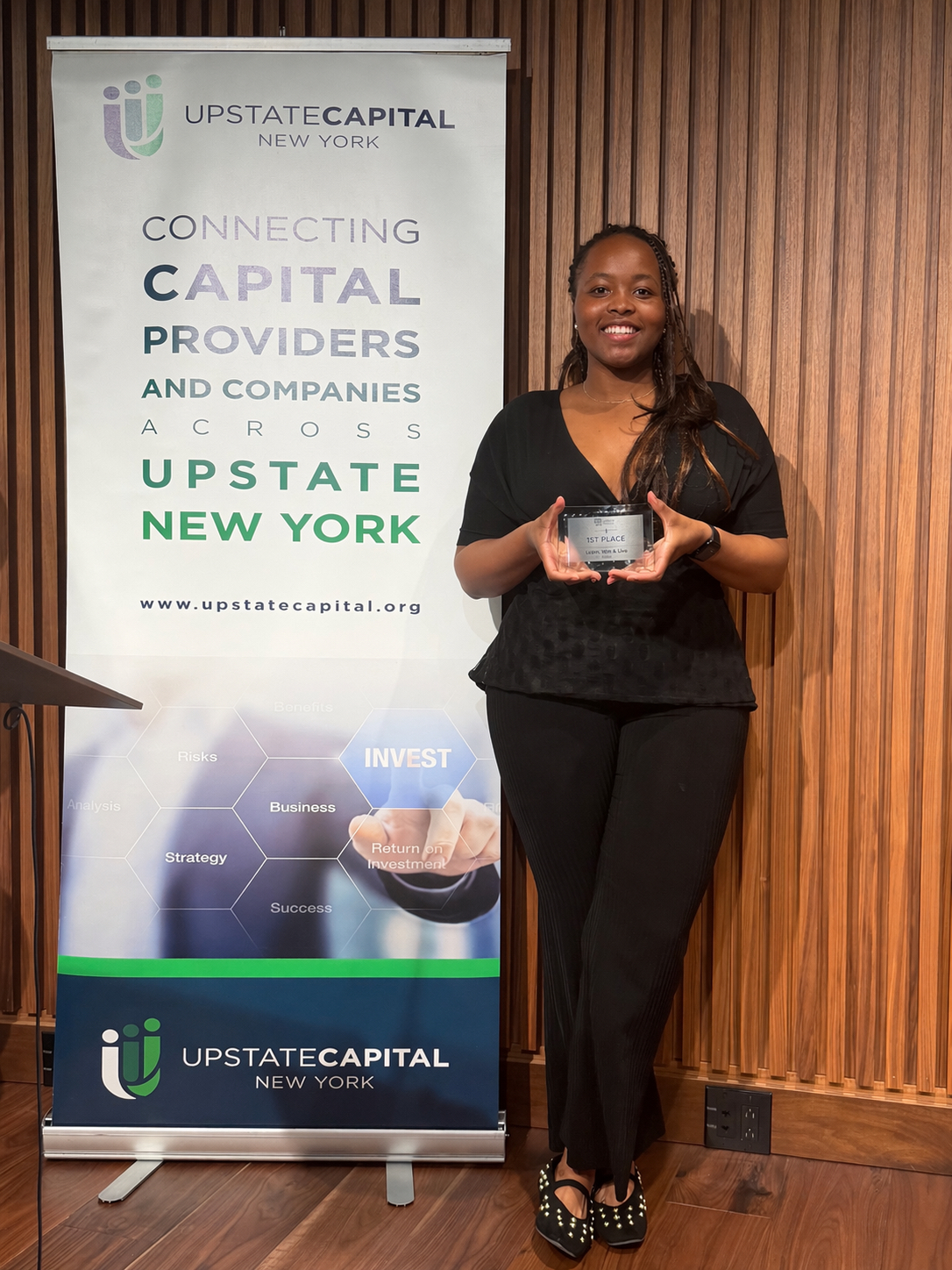
Buffard, a student in the School of Information Studies majoring in information management and technology, has spent more than a year reworking the concept of her business through repeated rounds of customer discovery, mentorship and pitch competitions. She won first place and $10,000 in the Learn, Work and Live category of the New York Business Plan Competition in April for her venture, then called SecondWave. It’s since been rebranded as Franchette and shifted from an initial focus on real estate investment access to broader financial well-being and emotional health.
Buffard says the April win gave her a boost of confidence about the path she is on. From her own family’s experiences, she knows that emotions and mental health are tied closely to the way people interact with money.
“I want a platform that actually helps people at the root of it, instead of putting a band aid over the problem,” she says.
From Real Estate Investing to Financial Well-Being
Buffard’s path to Franchette started long before she arrived at Syracuse. In high school, she helped her father in real estate during difficult times, work that brought her into contact with people in financial distress.
“I understood what it means to deal with people that are under financial stress and financial panic,” she says.
She developed several ventures at Syracuse, including a robotics program designed to bring STEM education to underfunded high schools, before landing on her current focus. Another was an entrepreneurship program for at-risk high schoolers.
Working on customer discovery for the concepts taught her the same lesson: a good idea only matters if the market wants it.
Her inspiration for Franchette came during an extended hospital stay last fall, when Buffard was sidelined for much of the semester. She began sketching out an idea to give everyday people access to real estate investing, which became SecondWave.
But as she pushed the concept through multiple rounds of customer discovery, Buffard found that a recurring theme kept surfacing. The pressing issue for most wasn’t a lack of investment opportunities. Instead, they were held back by a financial literacy gap, and beneath that, an emotional relationship to managing their money.
“I was initially more focused on financial literacy and getting people access to capital through alternate investments and other ways to build and grow wealth through passive income,” Buffard says. “But I found the emotional piece is probably the biggest part of it all, and that emotions are so tied to people’s financial behaviors.”
That insight reshaped SecondWave into what Buffard calls a “learn, practice, act” framework with Franchette. Users first learn the financial concepts relevant to their goals, then practice with real numbers, then take action. The idea is to direct them to partnerships and support from vetted, non-predatory community organizations. The goal is walking alongside someone from a shaky weekly budget to eventual access to wealth-building tools or steps, like buying a home.
The Meaning Behind ‘Franchette’
The name Franchette comes from Buffard’s grandmother. “Franchette” loosely translates to “free,” but Buffard says the name’s meaning is just one reason why she chose it for her app. It also reflects who her grandmother has been in her life: a steady, judgment-free presence who is always honest with her.
“I built Franchette to be the digital embodiment of my Nana’s love, grace and honesty,” she says.
Buffard says the goal is for Franchette to avoid shame-based alerts or lectures about spending. Instead, it will give users clear, unbiased financial information, without adding to the stress that often causes people to avoid their finances altogether.
Her family’s own struggles shaped her view that financial stress is as much an emotional issue as a question of having access to the right tools.
“I’ve seen what financial stress can do to people on the worst end of it,” she says. “Our education gap is only going to widen over time, our wealth gap is only going to widen over time, and I personally don’t feel like we’re doing enough to tackle those issues.”
She credits her iSchool coursework, particularly a database class, with giving her enough technical background to work confidently with engineers for her business, even though coding isn’t her strength.
Buffard is aiming to launch her MVP—minimum viable project—for Franchette by the end of summer, a milestone that will bring the app from pitch deck to something people can use.
Her advice to fellow students sitting on an idea is to do the customer discovery work, even when it’s uncomfortable and take honest feedback from mentors willing to say when something isn’t working.
“Just because the idea doesn’t work now doesn’t mean that it will never work,” she says. “But if you really want it, you have to do the customer discovery to get to that point.”