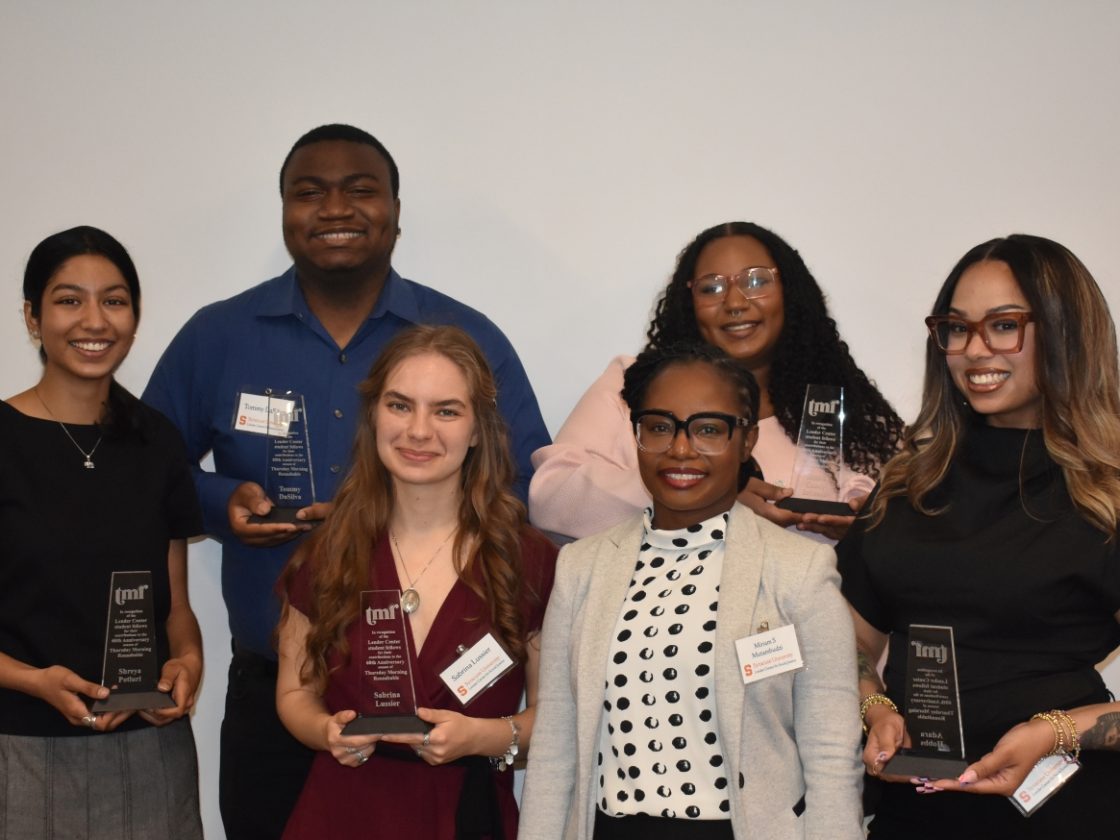
The Lender Center for Social Justice 2024-26 faculty-student fellows research team studied how housing impacts health in Syracuse.
Housing, Health and Community: What Syracuse Is Telling Us
Where you live affects how healthy you are. That idea sits at the center of Miriam Mutambudzi’s research—and behind the two-year project she led as the 2024–26 Lender Center for Social Justice Faculty Fellow.
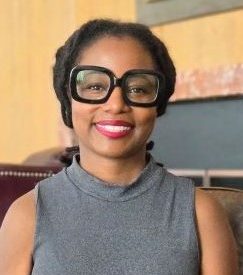
Mutambudzi is an associate professor of public health in the Maxwell School of Citizenship and Public Affairs. Her work explores how conditions like housing, employment and economic stability shape people’s health over their lifetimes.
For the Lender fellowship, she and a team of student fellows set out to examine housing as a structural determinant of health, reviewing the research evidence and engaging directly with community members to understand how this plays out in Syracuse.
Working in partnership with the University’s Office of Community Engagement and the Lender Center, the team reviewed research on housing and health, then engaged community members directly through the Thursday Morning Roundtable (TMR) series. The fellowship culminated when student fellows presented as panelists at a TMR session—offering their findings to the public as emerging experts in the field.
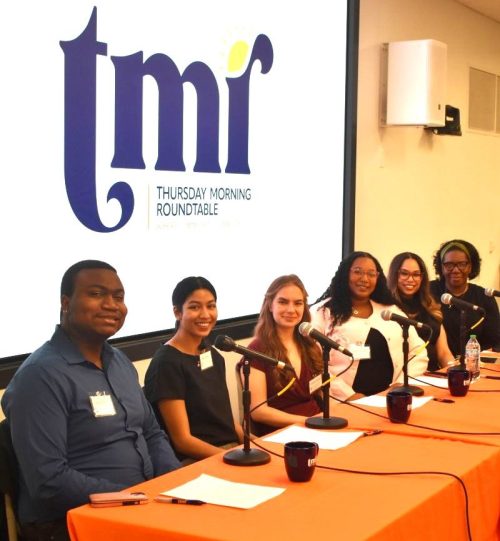
We spoke with Mutambudzi recently about the team’s work.
What did the community tell you that the data couldn’t?
Community voices from sessions like “The Conditions of Home: Health, Safety and Access” described how housing quality, environmental safety, neighborhood conditions and instability affect daily stress, food access and overall health and well-being in ways that do not show up in traditional datasets.
These conversations also revealed gaps in existing evidence, particularly around how local housing policies, service systems and lived experiences intersect in Syracuse—areas that would benefit from further research to better quantify these issues and understand their impact.
How did TMR become part of that work?
As the landscape for relevant research shifted in ways outside our control, it became clear that data analysis alone was insufficient to fully capture the lived realities of housing disparities in Syracuse. TMR was a natural fit, as the focus was on housing and provided an opportunity to incorporate community-engaged work in a meaningful way, one I don’t think we could have replicated any other way.
What role did the student fellows play?
They were genuine research partners, leading development of data briefings drawn from publicly available sources and peer-reviewed literature, then building presentations for the TMR sessions that framed topics for the roundtable’s participants.
Prior to each session, fellows met with panelists to learn about their lived experience in Syracuse and their work, using these conversations to develop informed moderator questions for the roundtable discussions. That process ensured that each session reflected both rigorous evidence and real community knowledge.
How has this project informed your ongoing research?
This work has helped me see how housing shapes health and everyday life beyond what quantitative data alone can fully capture. It has broadened my understanding of how housing, as a structural determinant, independently shapes health outcomes and survival. I look forward to bringing these community insights into that ongoing research.
What does this work mean for people living in Syracuse, and other areas like it?
The patterns we are seeing in Syracuse connect to broader research on how structural disparity in housing shape health and survival across communities. This work points to the need for both local action and research that can better quantify these impacts and inform policy and practice.
Student Fellows
The 2024–26 Lender student fellow team consists of:
- Tomiwa “Tommy” DaSilva ’26, a double major in public health and policy studies and citizenship and civic engagement in the Maxwell School
- Adara “Darla” Hobbs ’22, G’26, a graduate student in Pan-African studies in the College of Arts and Sciences (A&S) and recipient of a certificate of advanced studies in public management and policy from the Maxwell School. She is an alumna of the communication and rhetorical studies program in the College of Visual and Performing Arts
- Jamea Candy Johnson ’25, G’26, a graduate student in public health in the Maxwell School and an alumna of the psychology program in A&S
- Sabrina Lussier ’26, a triple major in geography, citizenship and civic engagement, and environmental sustainability and policy in the Maxwell School
- Shreya Potluri ’27, an architecture major in the School of Architecture