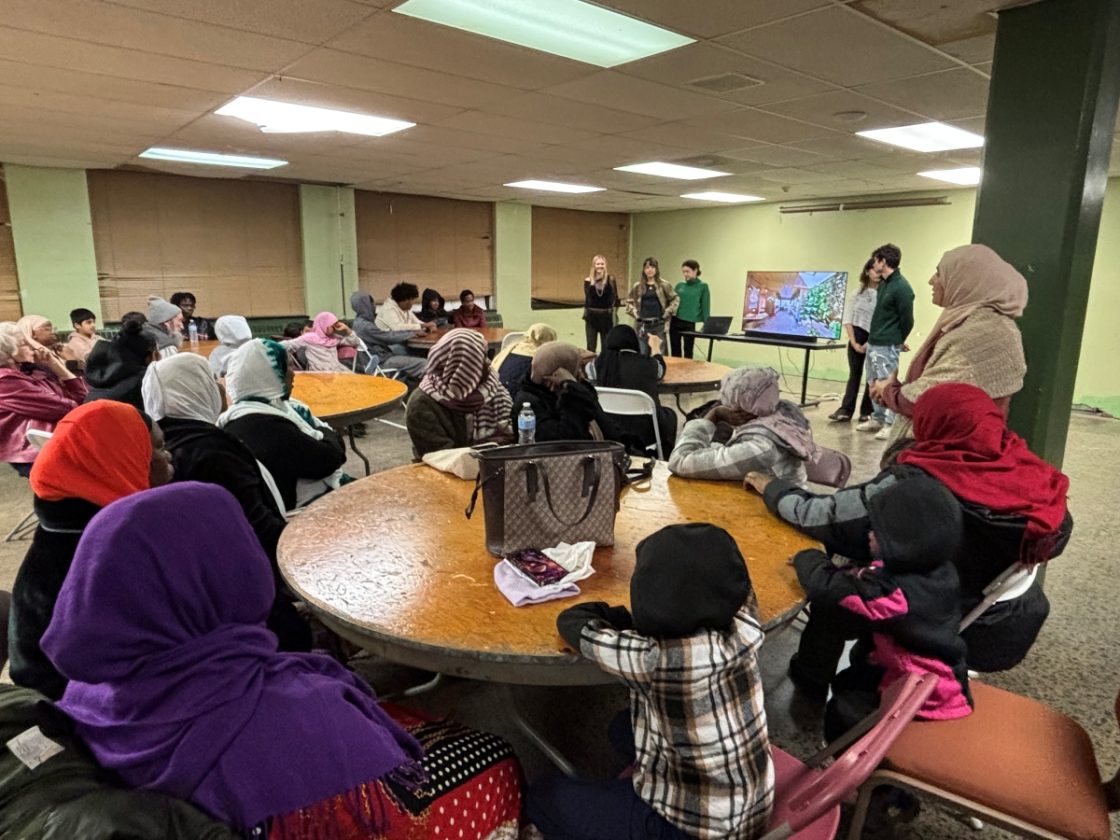
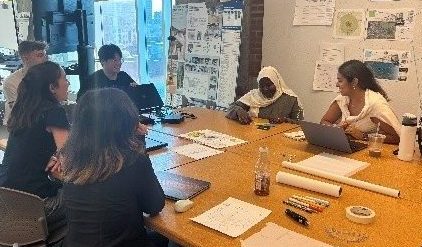
Students incorporated neighborhood needs, cultural elements and practical building concerns, gleaned from in-person meetings like this one, into their redesign of an aging bakery and apartment structure at 601 Park Street in Syracuse.
Community Voices Helped Students Shape a Neighborhood Building Redesign
Together, they took a corner bakery-grocery and turned it into a new cornerstone of a Syracuse Northside neighborhood.
The project for design students from Syracuse University’s College of Visual and Performing Arts (VPA) and construction management students from SUNY College of Environmental Science and Forestry (SUNY ESF) was both an experiential learning opportunity and a chance for them to undertake engaged citizenship in the year they worked with community residents and organizers of Northside Futures, a community nonprofit.
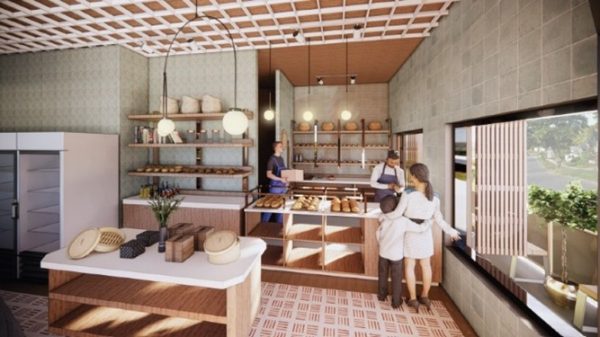
Students redesigned an aging, two-story bakery and apartment structure at 601 Park Street owned by Northside Futures into a modern building serving expanded residential and commercial needs. Northside Futures is a collaborative project of the Northside Learning Center and Justice Capital that focuses on workforce training and small business development, housing, remediation and property management, and community wellness and safety for residents of Syracuse’s Northside neighborhood.
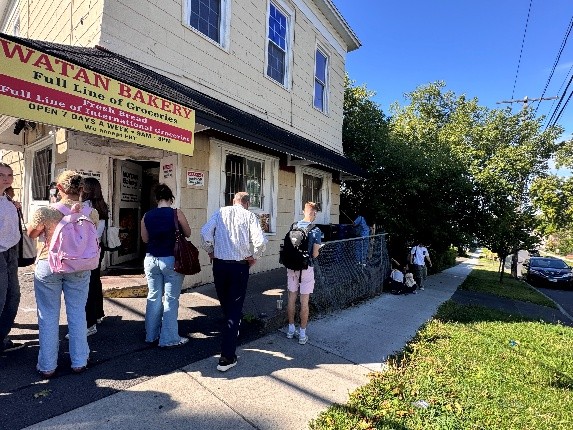
The project provided real-world professional experience through the VPA course DES 451 community design studio (also known as “Meaningful Partnership”).
The cross-institutional collaboration also involves SUNY ESF course CME 454, construction management, along with Northside Futures and the University’s Mary Ann Shaw Center for Public and Community Service.
The Real Thing
“This is not a hypothetical,” says Zoriana Dunham, assistant teaching professor in the School of Design and program coordinator. “It has real users, real challenges and real goals. Students engaged deeply with the community, developed real solutions for real stakeholders and came away with a genuine understanding of what it takes to bring a project to life.”
Founded in 2017 by Seyeon Lee, professor in VPA’s School of Design, the program became a formal service-learning initiative in 2022 through the Shaw Center. In addition to Dunham, Endong Wang, SUNY ESF associate professor in the Department of Sustainable Resources Management, is a co-teacher. Laurel Morton ’84, transportation coordinator at the Shaw Center, handles logistics.
During its first six years, Meaningful Partnership operated as a three-way collaboration among designers, construction managers and community stakeholders. This year it expanded to four components—with members of the Northside Futures cohort joining as active participants. They learned hands-on construction and trade skills alongside the students while accumulating design literacy for future independent community development. That model is an authentic co-design process where residents are positioned as empowered decision-makers shaping the future of their neighborhood, Lee says.
Two-Semester Overview
In the project, students from both institutions work together for a full year. Last fall, 19 environmental and interior design (EDI) students examined the facility, conducted site visits and client meetings, developed construction blueprints and presented final designs.
In the spring, 17 construction management engineering (CME) students joined them. They used the construction documents to prepare estimates, construction schedules, decide phasing and logistics, suggest value engineering strategies and explore sustainable grants and programs for the project.
Community-Centered Project
Dunham says direct communication with clients is essential to the project’s success.
“During our site visit students were able to speak directly with building owner Northside Futures and the building’s occupants (a residential tenant, the bakery owner and neighbors) and continued to obtain feedback throughout the process,” she says. “That kind of direct engagement with the people who live and work in these spaces is invaluable and it is very much part of what makes this process real.”
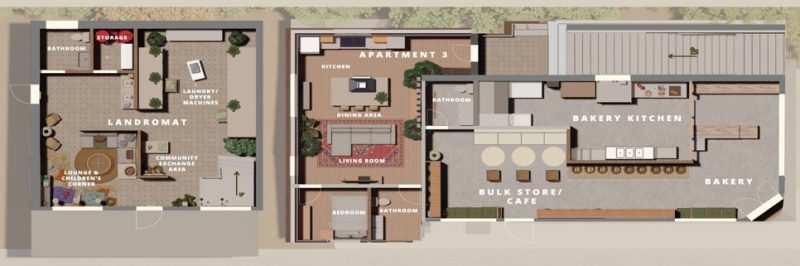
In addition to the bakery redesign, students developed alternatives for using an adjacent lot where a dilapidated garage was due for demolition.
Community members suggested building a library, day care center and a community/gym workout space for that structure. The client ultimately chose the idea of a laundromat, Dunham says, since it filled a real need, made sense financially as a revenue stream and was the right fit for the neighborhood.
Human Context
EDI student Ella Mchale says residents’ involvement expanded her understanding of the city and provided a true client experience.
“What we achieved goes so much deeper than just a design project,” she says. “Our community member Fatima helped ground us and gave us the real human context we needed to design with purpose. We took that seriously and created something accessible and meaningful while still bringing our own design concept to the table.”
EDI student and project manager Jolie Ramos says that despite language and cultural differences, “a bond was built based on the betterment of our shared community.”
“That exposure beyond our University bubble gave us the opportunity to not only engage with our community but to form intimate personal connections,” she says. “It was really beautiful to watch the relationships unfold and grow.”
Cultivating Community
“At its core, this project is about community, understanding and creating meaningful impact,” Dunham says. “The community representatives who came into our class shared their culture, needs and challenges and were a true voice for their neighborhood. The connections they formed with our students were genuine and those voices shaped everything. That deeply resonated with our students and it showed in everything they produced.”
Meaningful Partnership’s staying power results from an intentional and ongoing investment of time, interest and shared resources, says Lee.
“Community partnership is something that must be continuously cultivated and is grounded in relationship-building and trust,” she says. “It means sharing resources, lived experience, cultural knowledge and social awareness alongside academic expertise and a commitment to paying that knowledge forward.”