
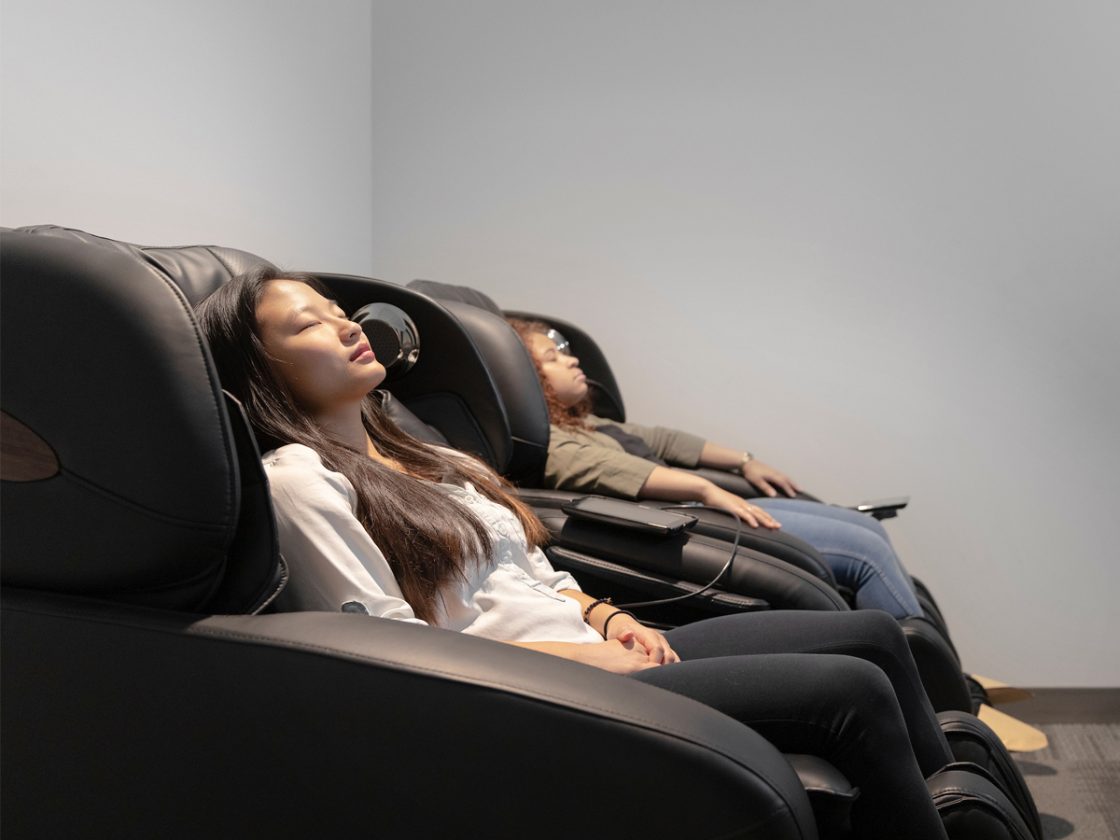
Students close their eyes and enjoy a moment of relaxation in the massage chairs, located in the Crowley Family MindSpa in the Barnes Center at The Arch. (Photo by Marilyn Hesler)
Get Better Sleep With These Expert-Backed Tips
Ready to recharge? Want to improve your health? Perform better? Prioritize your sleep.
Most college students operate on less than seven hours of sleep and that’s just not enough, says Carrie Brown, director of counseling with the Barnes Center at The Arch.

“We forget how essential sleep is to our functioning, our concentration, our physical well-being and our mental well-being,” Brown says. “It’s easy to forget that sleep is really important.”
For the long-term, the human brain isn’t fully formed until age 25, and sleep is one of the most powerful tools that helps support that development.
How much sleep is considered good? Seven to nine hours, Brown says.
How can you get there? The Barnes Center offers ample resources for students struggling to get a good night’s sleep.
“From access to the Headspace App and other meditation and mindfulness tools to our sleep group counseling and the Crowley Family MindSpa, we’re committed to helping our students improve their sleep quality and help them sleep more,” Brown says.
Here are four things to know about good sleep habits and what to avoid.
Go to Sleep and Let Your Brain Do Its Job
Sleep is essential for the body to repair itself, and our cells grow and regenerate while we’re asleep.
Sleep is also when, in the brain, the hippocampus consolidates information, turning short-term moments into long-term memories. Give your brain a chance to cement all that studying and classroom knowledge.
“Getting deep, restorative sleep is so important for students because they’re doing a lot of academic work and they need to be sharp and focused,” Brown says. “If you start stacking nights of poor sleep, you’ll see poor health habits start to form.”
It can also lead to decreased concentration and focus and increased stress, hypertension, irritability, anxiety and depression.
Tip: Brown recommends students aim to fall asleep and wake up around the same time each day, to help develop and maintain the circadian rhythm, the body’s internal clock.
Damaging Effects of Screens on Sleep
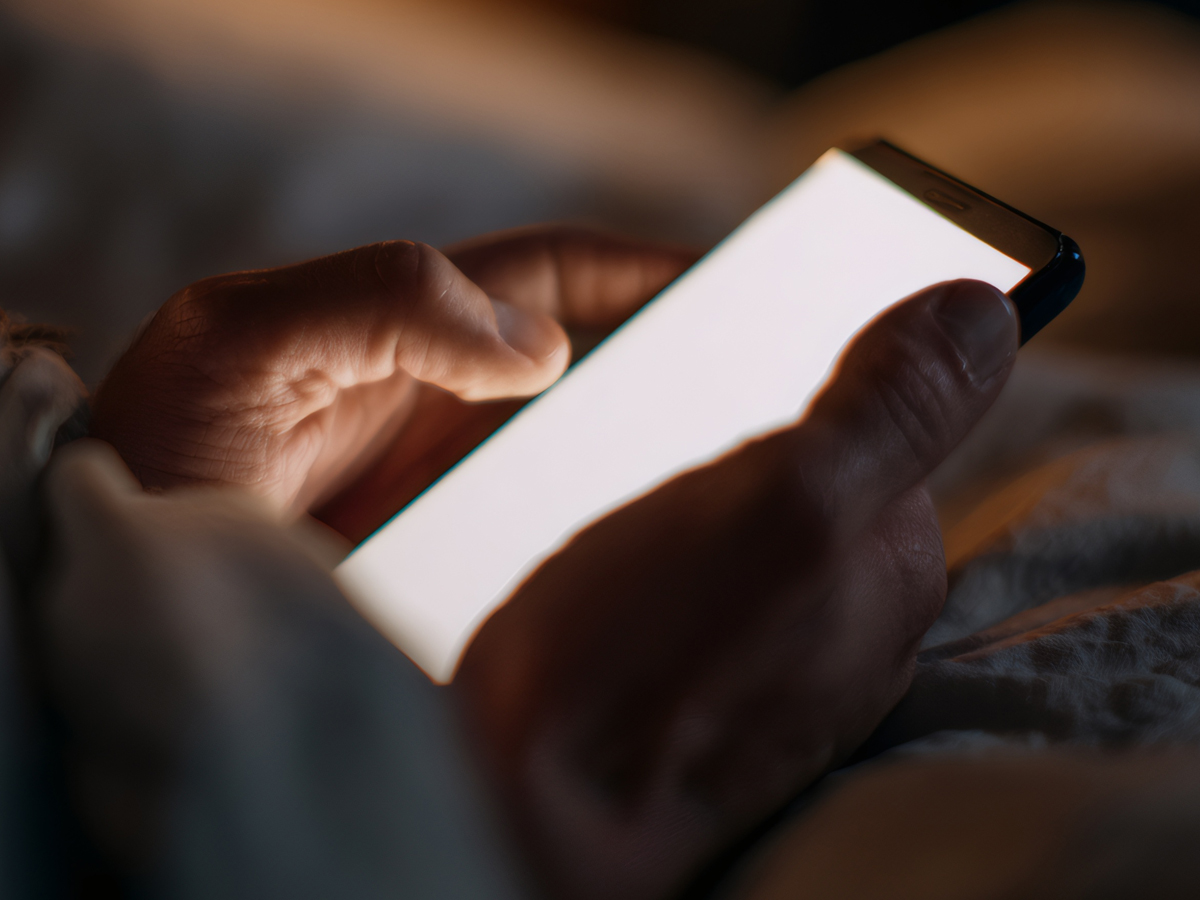
Whether it’s a cell phone, tablet, laptop or television, the screens we use emit a specific light that disrupts our ability to fall asleep by mimicking daylight and stimulating activity in the brain.
Brown says the blue light suppresses the body’s release of melatonin, which helps naturally prepare the body to fall asleep, and tricks the brain into a state of alertness.
Tip: She recommends getting off your phone or other screens at least 30 minutes and preferably one hour before bedtime, to allow the brain enough time to wind down.
Healthy Alternatives to Screen Time
Instead of scrolling on your phone, Brown suggests keeping a nightly journal, reflecting on the lessons from the day while creating a to-do list for the next day.
“That way, you get everything out of your mind before laying down for bed, and it won’t weigh on you as you fall asleep,” Brown says.
Tip: All University students have premium access to the Headspace App, which features guided meditation, mindfulness and bedtime exercises and a library of soothing sleep sounds.
What are healthy alternatives to screens?
- Taking a warm bath before bed
- Practicing deep breathing, meditation and mindfulness exercises
- Washing your face with a calming lavender lotion or using pleasing fragrances
- Drinking herbal teas containing chamomile
- Reading a book with dim lighting
“The biggest key is getting yourself ready for sleep,” Brown says. “Having a nighttime routine is great because it helps you stack together good habits that will improve sleep quality.”
How the Barnes Center Can Help
Brown says the ability to sleep is closely intertwined with eating habits, which is why nutritional counselors help students understand how diet and meal timing affect sleep quality.
Exercise is also connected. Brown says students who regularly engage in physical activity enjoy better sleep quality and are encouraged to connect with recreation staff and personal trainers.
Among the other resources offered to support better sleep and rest habits:
- appointments with Barnes Center Health Care or Barnes Center Counseling to discuss care options;
- Cognitive Behavioral Therapy for Insomnia sessions tailored for students struggling with sleep difficulties;
- self-care activities, tools and resources through the Crowley Family MindSpa; and
- group fitness yoga classes.
“People think you can catch up on sleep, but you really can’t reverse everything that happens to your body from constantly not sleeping well,” Brown says. “There’s no substitute for getting a good night’s sleep.”


