Falk Students Fueling the Holistic Development of Young Athletes
In Jamaica, where track and field stars like Usain Bolt (eight-time gold medalist) and Elaine Thompson-Herah (five-time gold medalist) captured national glory at the Summer Olympics, children grow up wanting to emulate their heroes.
But for every Bolt or Thompson-Herah, thousands of aspiring track and field athletes will never qualify for the Olympics. For them, they compete because they love their sport, not because they envision winning a gold medal.
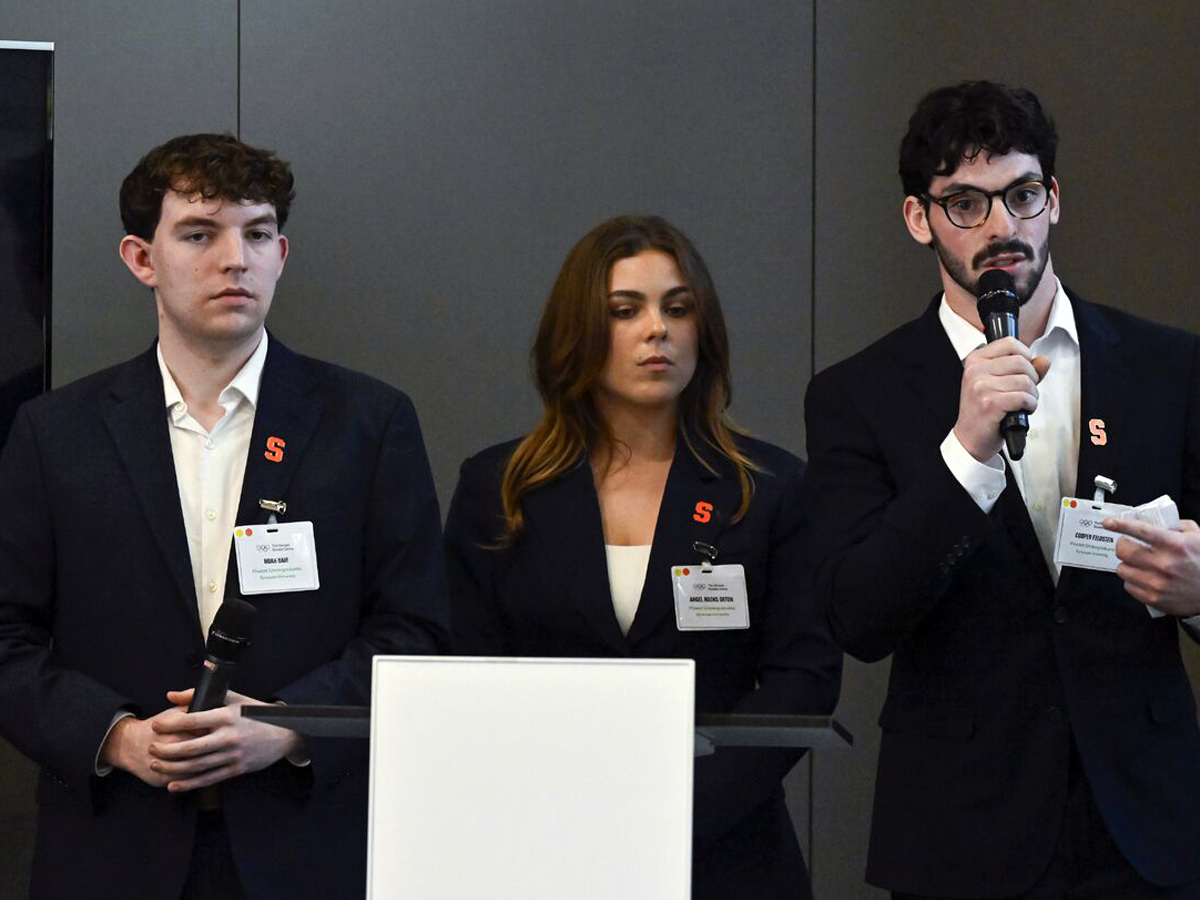
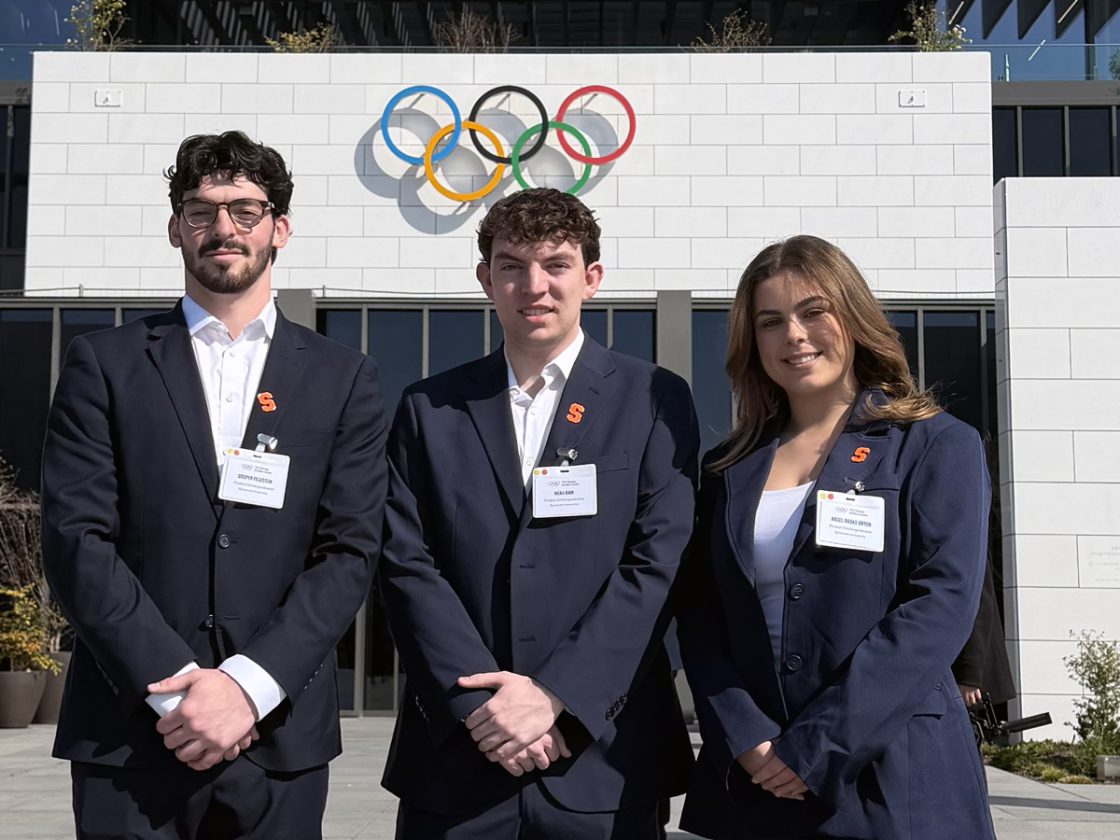
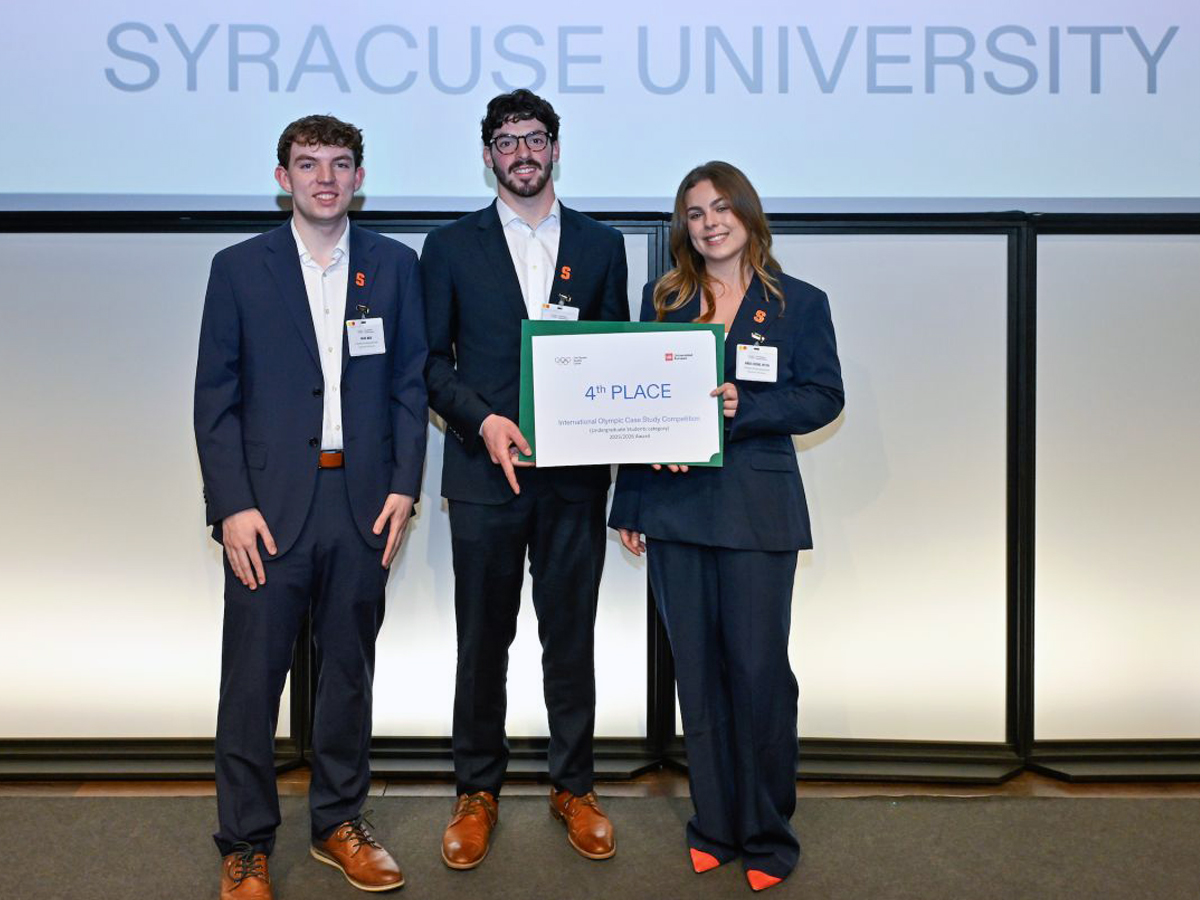
Recognizing the important role support systems play in the development of teenagers into adults, a team of three students in the Falk College of Sport built a holistic vision for supporting elite youth athletes in Jamaica during the Grand Final of the fifth annual International Olympic Case Study Competition in Lausanne, Switzerland.
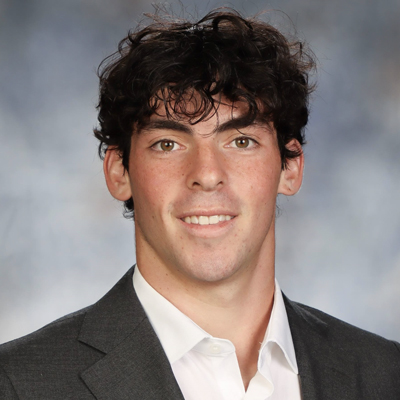
“Our focus was on preparing these students for a future outside of athletics. We wanted to give them the support they needed to succeed where they were at, but also to experience success once they’re done competing,” says Cooper Feldstein ’28, a sport management major.
The Falk students were invited to compete in the undergraduate event at the Grand Final after claiming first place in the semifinals back in December. Alexia Lopes, assistant teaching professor of sport management, served as the group’s advisor throughout the process.
Helping Athletes Feel Heard and Supported
At the Olympic Museum, Feldstein, Noah Bair ’28 and Angel Rooks Orton ’28 applied the lessons learned through their Falk College classes and presented their solution to a contemporary challenge in sports management.
The group selected Jamaica because of the country’s recognizable brand and success on the global stage, but also because of the national pride its citizens derive from the sport, and because of how many children take up sprinting.
To learn more about Jamaica’s youth track and field landscape, focusing on athletes ages 15 to 18, the students interviewed former Jamaican sprinter Kemardo Tyrell, now an assistant professor of research at Temple University’s School of Sport, Tourism and Hospitality Management. Tyrell spoke to the unique pressures facing Jamaica’s youth athletes.
The group focused on increasing athlete retention (especially among girls), improving academic success and programming, enhancing sport participation and addressing growing mental health challenges.
Knowing most won’t make a successful career in athletics, the Falk team “wanted to help ensure that these elite athletes feel heard and are protected while they are committed to their sport,” Bair says.
“We wanted to look at what the path of a youth athlete looks like, not only in terms of athletic success and accomplishments, but in their academics and their life outside of track,” says Bair, a sport analytics major. “What we found was there are wide gaps in how well students can build a sustainable and enjoyable career in athletics.”
Prioritizing Mental Health and Well-Being
Their research into the trends among Jamaica’s youth track and field competitors showed that if an athlete didn’t develop a positive mindset from an early age, they wouldn’t be able to handle the pressure of competing at the highest level.
“We needed to understand how we could provide them with the stability that they would need to perform to the level that they can actually get to, with how much pressure these kids are facing every day,” Feldstein says.

As one of their cornerstones, the team proposed developing an app as an all-encompassing support system, serving as a communication tool between coaches and their athletes.
Wanting athletes to stay present and in the moment while balancing academics with athletics, the trio came up with weekly mental wellness check-ins where the youths could discuss what’s on their mind.
“These elite athletes are facing a ton of pressure to succeed,” says Rooks Orton, a sport management major. “There are needs we’re trying to meet in Jamaica, and the app can help athletes stay in their program longer, enjoy their sport more and build habits to be successful in sports and in life.”
Leveling the Playing Field
According to research conducted by the group, once a female athlete turns 13, the chances of her quitting her sport are two times greater than those of her male counterparts.
“These females often get discouraged from competing because there isn’t a great support system in place, and because, for many girls, they don’t have examples of successful female athletes to look up to,” Rooks Orton says. “With the app, girls can ask questions, learn from successful women athletes and get the support they need to stay in sports at a high level.”
While the Orange trio didn’t win the Grand Final, the lessons learned from this global experience will stay with them as they prepare for a career in sports.
“This has been a formative experience,” Feldstein says. “The opportunity to work on this high-level professional project will prepare us for the future.”
“It was an honor representing Falk College and Syracuse on the world stage,” Bair says. “We put our best foot forward thanks to the incredible work we’re doing at Falk.”
Rooks Orton agrees. “It’s cool to be in a position where we’re constantly learning about the industry,” she says.
This experience was made possible by the generosity of Jeff and Andrea Lomasky, whose son, Marc Lomasky ’12, is an alumnus of the sport management program.