
Why People Misinterpret the News
When doctoral student Jamie Gentry G’27 covered politics as a local news reporter for the weekly Navarre Press in northwest Florida, she turned potentially complicated issues into easy-to-understand stories.
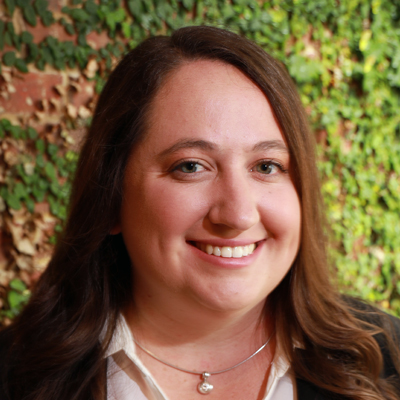
But Gentry was amazed at how often people would misinterpret, misconstrue or misremember the information presented in her articles. She overheard many conversations in person and online where citizens, equipped with this misinformation, carried out emotional arguments on a topic using incorrect information.
“I started wondering why I wasn’t able to reach as many people as I could with the actual facts of a story,” Gentry says. “It was frustrating because my job is to give people the best possible information. People need good information to make good decisions, and journalists are supposed to do that. But I found the system wasn’t working.”
Gentry knew there was a disconnect between how political news was being reported and how it was being talked about in her community. She vowed to become part of the solution.
How to Fix a Broken System
Driven by her reporting experiences, Gentry transitioned from journalism to higher education and began pursuing a doctoral degree in mass communications from the Newhouse School of Public Communications.
With a grant from the University’s Institute for Democracy, Journalism and Citizenship, Gentry’s ongoing research explores how artificial intelligence (AI) tools used by journalists impact how politics are discussed online and in the real world.
Gentry is comparing how people respond to and discuss a complicated news topic among their communities and on their social media channels under two different scenarios.
Out of 400 online survey respondents, one group is tasked with reading a traditional news story about unemployment, while another digests the information with the help of an AI-generated key takeaways breakout box. Half of the participants are told to share their impressions of the article with someone they know face-to-face, while the other half are tasked with sharing a post about the topic on social media.
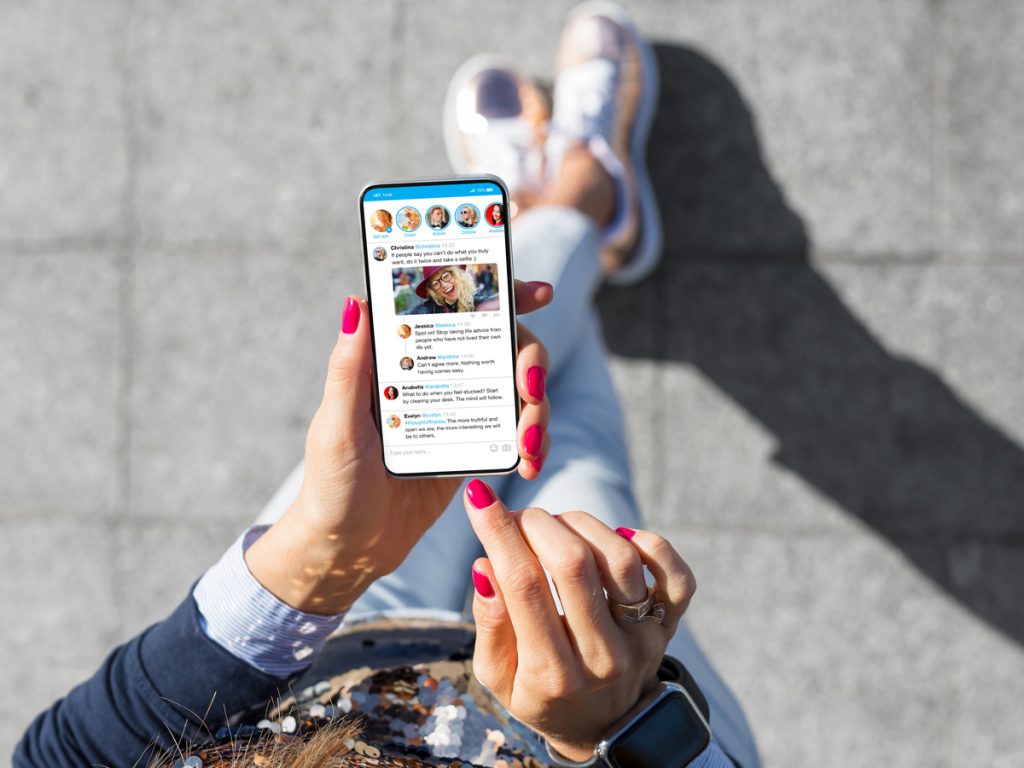
At each step, from the journalist sharing their reporting to the survey participant consuming the content to the person receiving the news, there’s an opportunity for the message to change from the original reporting.
“Generally, people tend to accept facts, but we still see arguments over facts online, and we see that people become very polarized,” Gentry says.
An important trend in the political communications research field—combining the study of media and political science—is examining how, in an increasingly polarized country, being divided politically impacts the quality of political reporting.
Especially during this “explosion of media choice” where people have more ways to consume the news, Gentry says this increase in choice means people are opting for stories they want to consume that align with their political ideology.
“That has a real impact on how people engage with politics and how they interpret the news they receive,” Gentry says when identifying an area for future research. “It’s not so much that people are blatantly believing misinformation and don’t care about facts. It’s more that partisanship is impacting how people receive messages and what stories they do and do not see.”
Can AI Be Trusted?
As informers, journalists are charged with breaking down complex topics into digestible content, and they make decisions about what information to include, which sources to interview and which stories to cover.
When she was covering the news, Gentry says it was easy to think she knew what the most important angles were, but as more journalists use AI to produce story summaries, Gentry says it’s natural to wonder whether AI can convey this important information.
“Journalists influence how people learn about and understand a subject matter. Should we be trusting these AI tools to reliably make decisions about what is the most important part of a story?” Gentry says. “Whatever AI decides is the most important snippet of information is being pushed out and that has real implications for how people are getting the news and what they actually know about a story.”

Gentry expects to receive data from her survey participants later this semester. Among her anticipated findings: story summaries make the facts more accessible and easier to process, retain and share.
“My goal is to make journalists better by giving them the tools to better understand how their work impacts the public,” Gentry says. “By sharing data on what works and what doesn’t, hopefully we can make big improvements in the way the news is shared.”