Students Present Inclusive Design Solutions at Innovation Showcase
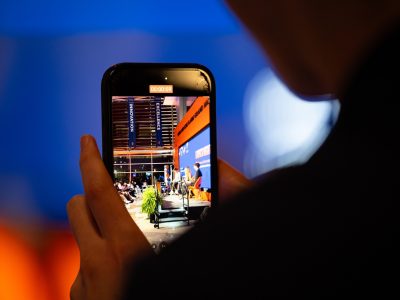
Students transformed lived experience, empathy and emerging technology into inclusive solutions at the Intelligence++ Innovation Showcase, hosted at Bird Library on Dec. 9.
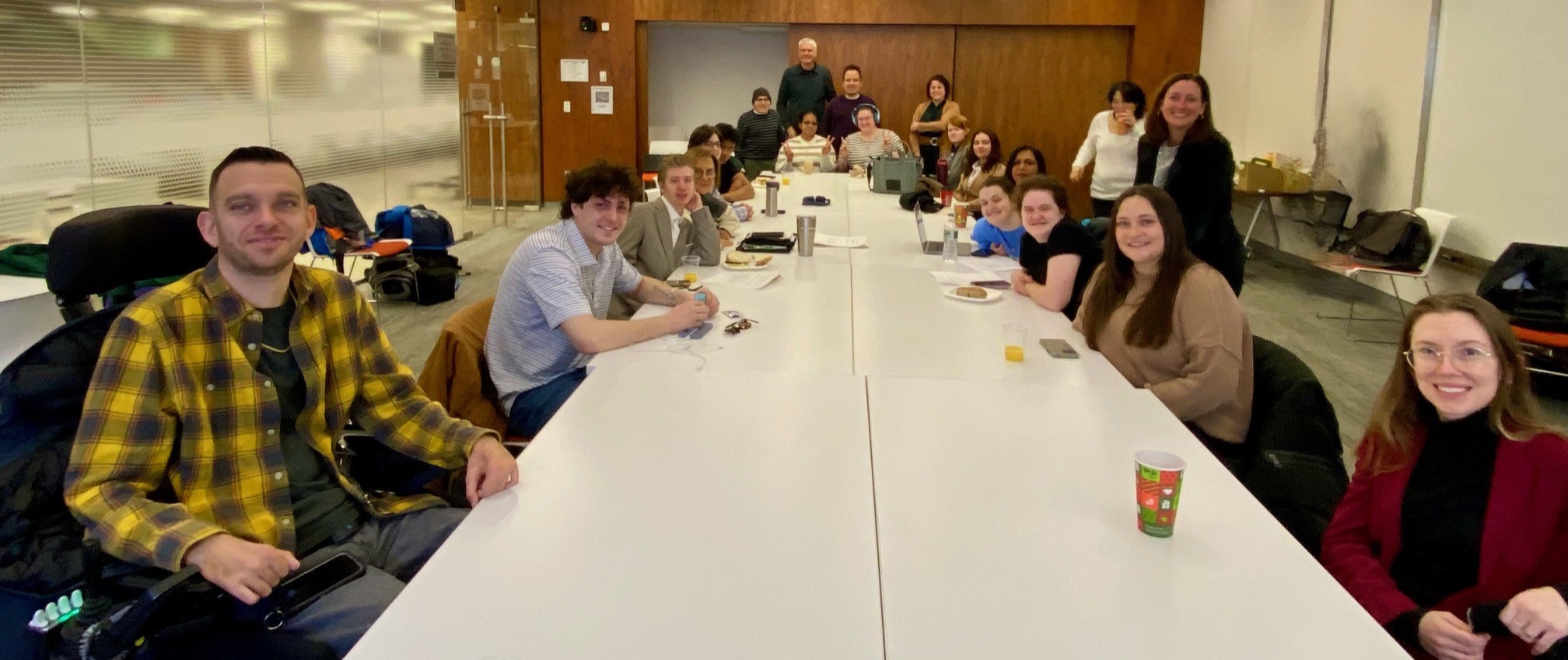
The event marked the culmination of a semester-long interdisciplinary design course offered through the School of Education’s Taishoff Center for Inclusive Higher Education-InclusiveU, the College of Visual and Performing Arts’ School of Design and Syracuse University Libraries.
Open to undergraduate and graduate students across campus, including students with intellectual disability, the Intelligence++ program brings together teams to co-design products solutions to challenges that people with disabilities face in daily life.
The initiative, funded by the Foundation for Augmented Intelligence, encourages teams to learn universal design principles, conduct deep user research, learn the basic principles of entrepreneurship and deliver functional prototypes and pitch presentations by semester’s end.
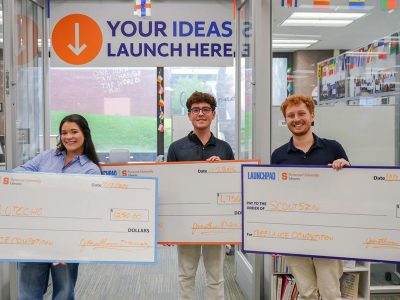
Four student teams received enthusiastic feedback from judges across business, accessibility and technology sectors.
Detecting Dairy Allergens: Zero React
The first team, Zero React, asked: What if people with dairy allergies could eat without fear? Inspired by personal family experiences, the six-person team created a portable strip that detects dairy proteins, especially milk and casein, in everyday foods. Like a rapid test, users apply a food sample and get clear results in under a minute.
The students used 3D modeling and Information Technology Services MakerSpace tools to build the prototype and developed branding, instructions and a go-to-market strategy. Extensive interviews, ranging from caregivers to allergists, identified their primary customer as parents of children with severe allergies, who constantly navigate hidden ingredients and unclear labels.
Zero React proposed multiple sales channels, including pharmacies and allergist offices, and emphasized fully accessible instructions and displays. Judges noted strong product-market fit and encouraged the team to move toward regulatory testing and commercialization.
Making Meal Planning Inclusive: Accessible Appetite
Accessible Appetite addressed a universal frustration: deciding what to eat. For neurodivergent individuals, the mental load of planning meals, managing nutrition and staying on budget can be exhausting.
Their application combines three tasks typically siloed in other apps, including recipes, grocery lists and nutrition, in one clean, accessible interface. Key features include:
- Smart Plate Builder for visual portioning
- Smart Substitutions tailored to sensory preferences
- Allergy Filters that automatically replace trigger foods
- Machine-Learning Suggestions personalized over time
A built-in chatbot provides step-by-step support. Judges noted the tool’s broad appeal and praised the inclusive design that could ease stress for many households.
Navigating Grocery Stores With Calm: Ease Cart
One the premise that bright lights, noise and crowded aisles can make grocery shopping overwhelming, Ease Cart set out to create a calmer experience.
Interviews revealed that sensory overload leads many students to avoid stores or rely solely on delivery. The two-person team developed a soothing navigation app that reduces time in high-stimulation environments. Lavender tones reinforce calming intent and features include:
- Minimal-distraction visual modes
- Audio read-aloud assistance
- Budget tracking and receipt organization
- Quick list templates for routine shopping
Judges applauded the team’s focus on a real barrier that can limit independence and noted that the design could benefit nearly anyone seeking a quicker, lower-stress trip to the store.
Phones for Emergencies Only: Every Second Counts
With more K–12 schools, now including those in New York state, banning student phones during the day to reduce distraction, a safety concern has emerged, What happens when a student needs immediate help?
Every Second Counts designed a solution that keeps students off their phones while preserving emergency access. Their VPN-based “emergency-only mode” automatically activates on school Wi-Fi, replacing apps with a single button to call for help.
The team consulted teachers, administrators, parents and students to understand implementation and concerns. The University’s Senior Vice President for Digital Transformation and Chief Digital Officer Jeff Rubin advised on technical feasibility. Judges encouraged the team to continue development as policies evolve.
A Program Designed for Impact
Throughout the showcase, judges emphasized how advanced the work felt, less like class projects and more like early-stage startups. That outcome reflects the program’s purpose, said Gianfranco Zaccai ’70, H’09, who founded and funded Intelligence++.
“That is exactly the vision of Intelligence++,” says Zaccai. “It is designed to empower students to design together, while exploring entrepreneurship as a tool for inclusion. The program invites students from engineering, design, business, communications, and the arts to collaborate, as it partners with stakeholders and community organizations to ensure that lived experience leads the process. Students learn how rigorous discovery leads to better products and how accessible design helps everyone.”
Attendees left impressed by the students’ creativity and professionalism. “These could be real companies solving real problems,” one attendee remarked. For students, and for the thousands of people who could benefit from their ideas, this showcase is just the beginning.
Story by Linda Dickerson Hartsock