Q&A: Meet Pamela Odom G’03, SCSD’s New Superintendent
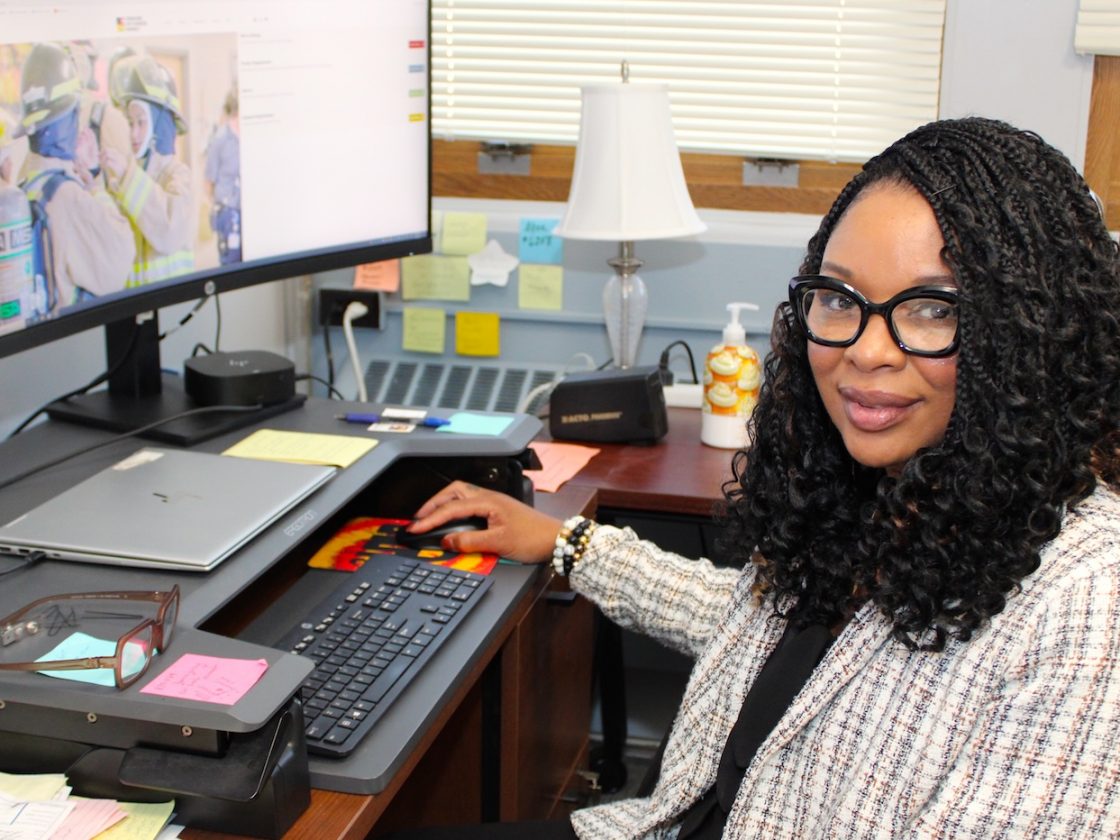
On Nov. 1, 2025, Pamela Odom G’03 became the new superintendent of the Syracuse City School District (SCSD), the third University graduate in a row to take the reins of the city’s schools.
A graduate of the School of Education’s Certificate of Advanced Study in Educational Leadership program, Odom follows Anthony Davis G’03 (Special Education), whose retirement went into effect on Oct. 31. In turn, Davis took over from Jaime Alicea G’88 (Foreign Language Education), who stepped down in 2022.
The SCSD Board of Education near-unanimously selected Odom in August.
“I am incredibly honored and humbled to serve as the next superintendent of the Syracuse City School District,” Odom said after her selection. “I want to thank the Board of Education for entrusting me with this opportunity and Superintendent Davis for his mentorship and unwavering dedication to our students. He has laid a strong foundation, and I am committed to continuing the work we’ve started; championing equity, empowering educators, and ensuring every child has the support they need to thrive.”
Odom has served her school district for more than 30 years. Beginning as a teaching assistant, substitute teacher and administrative assistant, her administrative career continued with her appointment as vice principal of Corcoran High School and then principal of Clary and Grant middle schools. Following those appointments, she supervised the district’s middle schools, later becoming an assistant superintendent with oversight of secondary schools, career and technical education, athletics and adult education.
A graduate of SCSD’s Nottingham High School, Odom attended St. John’s University in Staten Island, NY, graduating in 1994. She played basketball at both Nottingham and St. John’s, earning two All-Big East selections for the Red Storm. She earned a master’s degree from SUNY Oswego before taking a certificate of advanced study from Syracuse University.
We caught up with Odom to ask about her approach to her superintendent role; what students, parents and community members can expect from her tenure; and after three decades in education, what advice she has for new teachers.
My approach is to continue to involve the community, student choice and voice and staff, being collaborative and bringing people to the table with shared decision-making.
We are in the process of setting up meetings in the community with Superintendent Davis as we do our hand-off, so the community can get to know me and the things I want to focus on. We’re going into churches, boy’s and girl’s clubs and libraries. I want to have the community involved in all the things that are going well and in those we can improve upon.
My emphasis continues to be on the district’s strategic plan, on an equitable voice for the students, in finding the right staff and retaining them, on literacy and numeracy and on creating pathways that enable students to go to college or into workforce.
We are making a big push about chronic absenteeism, focusing on educating parents. We want to educate them that if a child misses one or two days a week, those can add up. We want them to understand instructional loss and what that looks like in the classroom.
So, as part of our Chronic Absentee Plan 2.0, we are doing home visits and coming up with individualized plans to help get children into school, helping families where we can. Parents and guardians have been supportive. We’ve done a lot to educate them about what the ramifications are when a child misses school.
Syracuse was wonderful in that it prepared me for educational administration through doing hands-on scenarios.
Professor Diane Canino-Rispoli was a mentor and a friend, and as a former teacher, she knew what was happening in urban education. She would have us do group scenarios and collaborate with our classmates—about parent situations or operational situations such as a fire alarm going off. You had to work side-by-side with your group to come up with a plan.
That work prepared you by putting you in a leadership role and asking how your decisions impact students and staff, how you would answer to your superintendent and so on. These were real-life, hands-on experiences to make sure you were prepped and prepared.
It was not just one experience but multiple experiences about the kinds of things you need to know. This way, I was prepped how to work with a team to find solutions and to make sure that we were ready to go and that we did not panic. I still utilize these strategies to this day.
Professor George Theoharis has been wonderful, as was Leela George, who replaced Diane and who has just retired herself.
I worked with George and Leela as an assistant and then deputy superintendent. I applaud the work they are doing and their push for diversity, equity and belonging in education. It’s nice to watch. Members of our district team are working with them now, and that keeps me involved in some capacity.